Cartier Privé 2026: Three Icons Return for the Tenth Edition
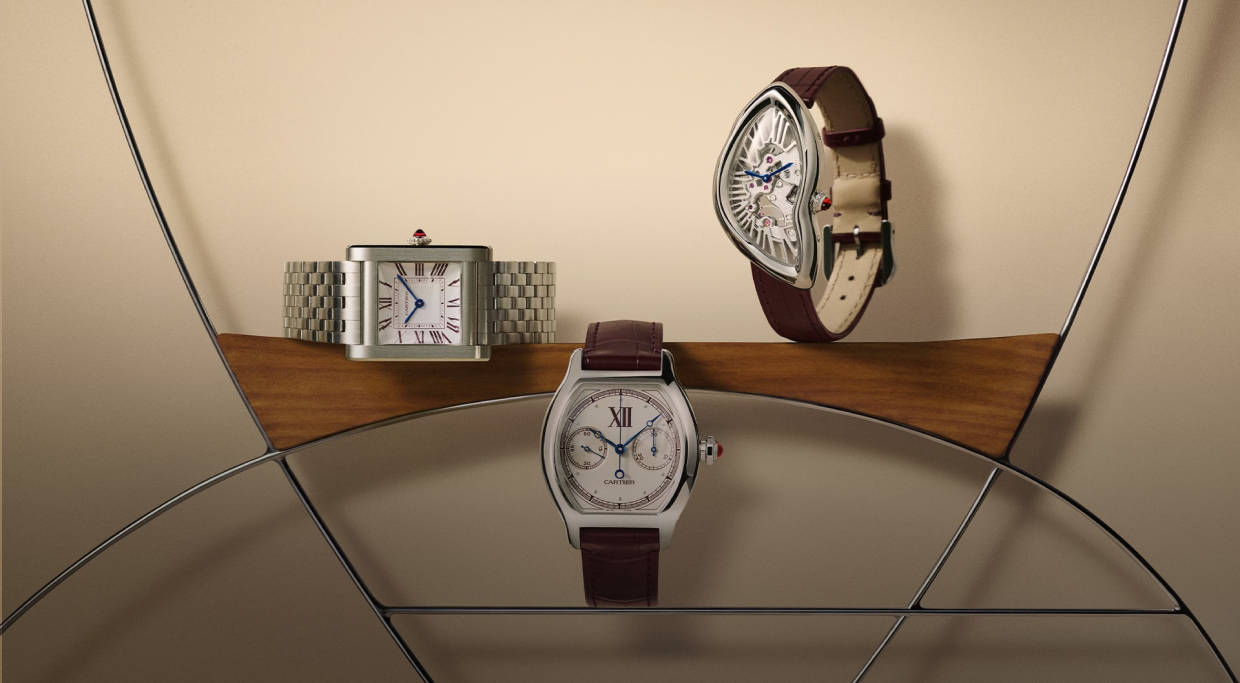
For its tenth edition, Cartier Privé revisits three watches that express the Maison’s mastery of form from very different perspectives: the Crash Skeleton, the Tortue Monopusher Chronograph and the Tank Normale.
Cartier Privé is the annual collector-focused chapter through which the Maison explores notable designs from its archives. The 2026 edition is particularly revealing. Instead of presenting a single historic shape, Cartier brings three previous Privé protagonists together and shows how case design, movement architecture and decorative craft can become one language.
For enthusiasts exploring Cartier watches in Armenia, these creations offer a deeper view of the Maison beyond its best-known everyday collections. L’Orange Gold in Yerevan can advise clients on the current local Cartier selection and related collection inquiries; availability of exceptional or limited references must be confirmed individually.
Crash Skeleton: movement becomes silhouette
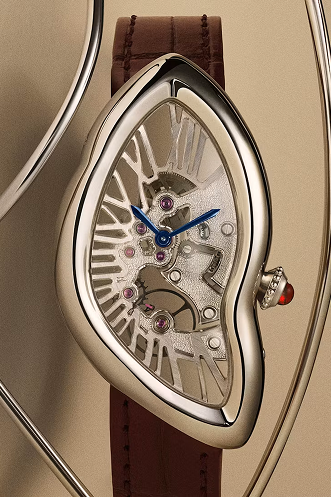
The Crash is among Cartier’s most unconventional designs. Its distorted outline appears almost fluid, rejecting the geometry normally used to organise a watch case. In the 2026 Crash Skeleton, Cartier carries that shape into the movement itself.
The hand-wound Manufacture 1967 MC is developed as a skeleton calibre whose architecture follows the famous asymmetrical profile. The bridges are not simply hidden behind a decorative dial; they become the visible structure of the watch. Cartier also highlights a traditional hand-hammered finish applied to the bridges, giving the technical construction a distinctly artisanal surface.
This is why the Crash Skeleton matters as more than a rare variation. It demonstrates the central idea of Cartier watchmaking: technique is made to serve design. The movement is compelling because it belongs specifically to this case and could not be mistaken for a generic mechanism placed inside an unusual shell.
Tortue Monopusher Chronograph: complication in motion
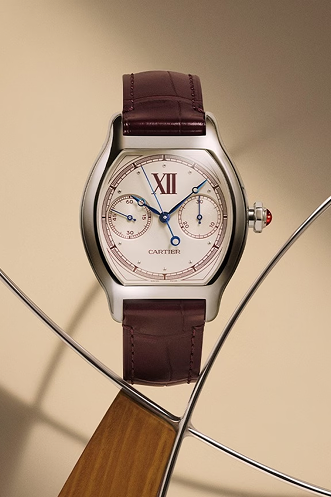
First created in 1912, the Tortue takes its name from its tortoise-like outline. The curved tonneau form created a different visual rhythm from the round pocket-watch shapes that influenced many early wristwatches.
The 2026 Privé interpretation returns to the Monopusher Chronograph. A single pusher controls the chronograph’s start, stop and reset functions, concentrating the interaction into one elegant mechanism. Cartier emphasizes the view from the case back, where the movement’s gears reveal the choreography behind the complication.
For collectors, the attraction lies in the relationship between mechanical complexity and restraint. The Tortue’s case already has a strong identity, so the chronograph must feel integrated rather than added. The monopusher format preserves that purity while providing a richer technical experience.
Tank Normale: disciplined geometry
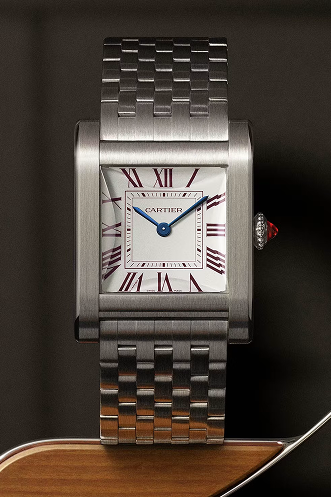
The Tank Normale represents another side of Cartier design: lucid geometry and balanced proportion. For the tenth Privé edition, Cartier presents a version with a seven-row platinum bracelet, a hand-wound mechanical movement and inspiration drawn from a 1934 model.
The bracelet is central to the effect. Instead of treating the case as a separate object attached to a strap, the horizontal rows extend its architecture around the wrist. Platinum adds density and discretion, reinforcing the Tank Normale’s character without relying on overt ornament.
Placed beside the Crash Skeleton and Tortue Monopusher, the Tank Normale makes the breadth of Cartier’s design vocabulary clear. One model is deliberately irregular, one is curved and mechanically animated, and one is rigorously rectilinear. All three remain immediately identifiable as Cartier.
What Cartier Privé reveals about the Maison
Cartier’s watchmaking heritage is often described through icons, but Privé shows that these icons are not static. Historical forms can be studied, reconstructed and reinterpreted through new movements, proportions, materials and métiers d’art.
The 2026 trio also makes a useful point for anyone choosing a Cartier watch. The decision is not only about case material or complication. It begins with shape and the feeling that shape creates on the wrist. The expressive Crash, sculptural Tortue and architectural Tank Normale address three very different personalities.
Exploring Cartier in Yerevan
L’Orange Gold presents an authorized selection of Cartier watches in Yerevan together with private consultation and after-sales guidance. Clients interested in Cartier Privé or in the Maison’s current Tank, Santos, Panthère, Ballon Bleu and other collections are invited to contact the boutique for current information.
Visit L’Orange Gold at 11-54 Abovyan Street, Yerevan, or arrange an appointment in advance. Because Cartier Privé pieces are specialized and availability is highly limited, no article should imply that a particular reference is in stock unless the boutique has confirmed it.
Frequently asked questions
What is Cartier Privé?
"Cartier Privé is the Maison’s collector-focused series revisiting significant historic watch designs through limited, technically or artistically distinctive interpretations."
Which watches are highlighted for Cartier Privé 2026?
"Cartier’s tenth edition highlights the Crash Skeleton, Tortue Monopusher Chronograph and Tank Normale."
What movement is used in the 2026 Crash Skeleton?
"Cartier identifies the hand-wound Manufacture 1967 MC, a skeleton movement shaped for the Crash’s asymmetrical case."
Are Cartier Privé watches available in Armenia?
"Availability should be discussed directly with L’Orange Gold in Yerevan. Privé references are specialized and may be limited; the boutique can provide current, reference-specific guidance."